In Portcullis House on Tuesday, former Secretary of State for Defence Rt Hon Sir Ben Wallace told the Defence Committee that ‘there is always a danger with that organisation that they confuse elitism with exceptionalism.’ The organisation he referred to was understood to be the UK Special Forces (UKSF).
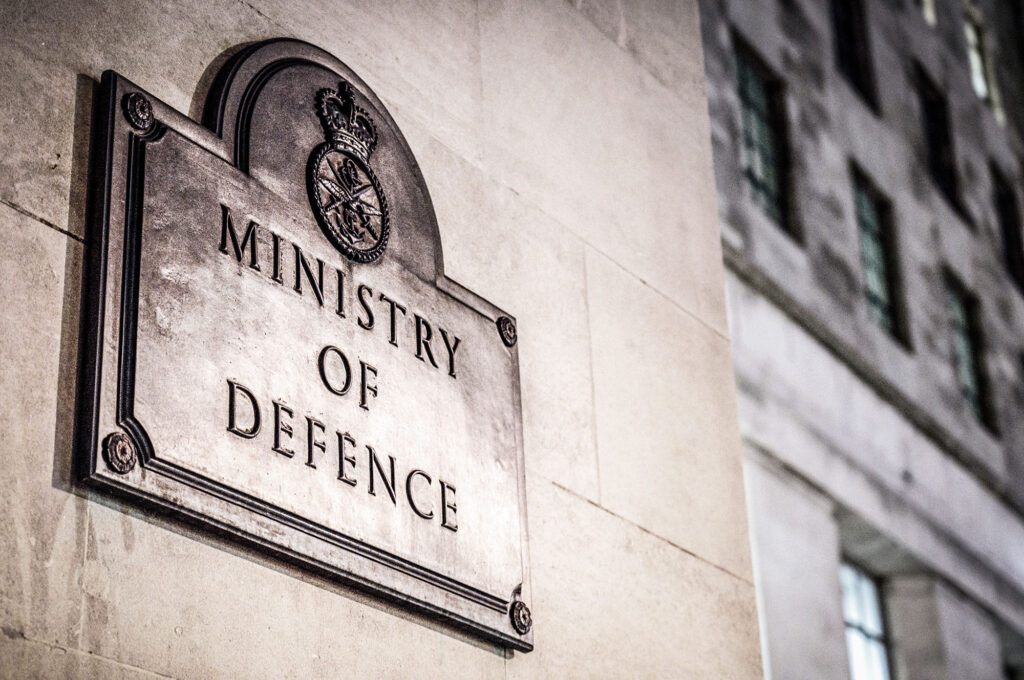
Wallace was giving oral evidence to the Defence Committee’s inquiry launched in September 2025 to examine the Afghan data breach and the government’s subsequent resettlement schemes. Given the slew of troubling allegations surrounding the conduct of UKSF in Afghanistan, some of which are the subject of an ongoing independent statutory inquiry, the former defence secretary’s words ring particularly true. Because the data breach itself, the extraordinary superinjunction that followed, and the way Parliament was sidelined all point to something deeper than administrative failure. They reveal a wider culture inside the Ministry of Defence (MoD) marked by secrecy, cover-up and impunity.
MoD data breach put lives at risk
In February 2022, the MoD leaked the sensitive personal data of more than 18,000 Afghan nationals who had applied to be relocated to the UK having previously worked for or with the UK government in Afghanistan, putting them at heightened risk of reprisal from the Taliban. The breach was only discovered 18 months later when some of the data was posted on Facebook. The subsequent relocation of individuals affected by the breach and their immediate family members is expected to have cost the taxpayer close to £1 billion, excluding legal and potential compensation costs.
Yet Parliament was not informed. Neither the Defence Select Committee nor the Intelligence and Security Committee (ISC), the bodies responsible for overseeing the MoD and the Intelligence Community, was briefed on the breach or the government’s response. This omission is particularly troubling given that the ISC holds the necessary security clearance to receive classified information and, under the Justice and Security Act 2013, material cannot be withheld from it on the grounds of classification or sensitivity.
Under the cover of a superinjunction
After the breach was discovered, the UK government sought a court order barring any media disclosure of the data breach. In September 2023, a High Court judge in London issued a superinjunction – a rare and powerful court order preventing reporting on the breach and on the existence of the injunction itself. Although the use of an injunction may have been justified on security grounds, it remains unclear why the decision was made to bypass Parliament entirely. Parliamentarians were outraged. ‘I do not see why Parliament was not read in to the situation… so they could exercise that oversight and scrutiny over ultimately what was an extra spending of £1 billion of government money’ Defence Committee member Mike Martin MP told the BBC.
After the superinjunction was lifted, the MoD revealed to the BBC under the Freedom of Information Act that there had been 49 separate data breaches at the unit handling Afghan relocation applications. Sean Humber, a partner at Leigh Day who acts for Afghan citizens affected by MoD data breaches, observed bluntly that ‘the MoD seems institutionally incapable of keeping information secure’.
The Defence Committee’s broad inquiry into the February 2022 breach and the government’s response is ongoing. The Public Accounts Committee has since stated that it is not confident the MoD has done enough to reduce the risk of future incidents. The ISC has now launched its own inquiry into the Intelligence Community’s role and activity in connection with the breach.
A familiar pattern
Taken together, the breach and the superinjunction point to a broader pattern within the MoD: a reflex of secrecy, cover-up and impunity when things go wrong.
Allegations of war crimes and violations of international humanitarian law by UK forces in Afghanistan have been raised repeatedly for more than a decade. A 2014 Freedom of Information request revealed 36 investigations between 2010 and 2014 into allegations of mistreatment of Afghan nationals, resulting in just four convictions.
This was followed by Operation Northmoor (2014-2019), in which the Royal Military Police (RMP) investigated 675 allegations of misconduct including unlawful killing by UK Special Forces between 2005 and 2013. The investigation cost £10 million and resulted in no prosecutions. While the MoD maintained that no evidence of criminality was found, RMP investigators interviewed by the BBC dispute that conclusion.
Separate investigations, including Operation Cestro, similarly failed to result in prosecutions despite referrals to the Service Prosecuting Authority. In 2024, a report published by Ceasefire found recurrent and systemic shortcomings in the UK’s practice of investigating civilian harm caused by its military forces, including in Afghanistan.
The ongoing Independent Inquiry relating to Afghanistan (IIA), chaired by Lord Justice Charles Haddon-Cave and established following revelations in the media and as a result of litigation, represents an important step toward uncovering the truth. The Inquiry has already exposed serious failings. It has heard evidence that a server containing material from earlier investigations into alleged unlawful killings was deleted after the RMP was told to ‘take no action’. It has also heard that UKSF leadership suppressed evidence of possible war crimes and that Operation Northmoor was under-resourced and closed prematurely.
After the work of the IIA had begun, UKSF blocked thousands of resettlement applications submitted by elite Afghan units known as the ‘Triples,’ who fought alongside UK forces. One UKSF officer reportedly personally rejected more than 1,500 applications. The effect was to prevent possible witnesses of unlawful British conduct – who, if present in the UK, could be summoned by the Inquiry – from giving testimony.
A historic lack of oversight
Transparency and scrutiny are particularly limited when it comes to Special Forces because of the government’s longstanding ‘no comment’ policy – a relic of the Thatcher era – and the absence of external oversight. Parliament can scrutinise regular forces, intelligence agencies, and defence policy, but has virtually no ability to scrutinise Special Forces operations, even behind closed doors.
Defence Secretary John Healey has said that reforms to UKSF oversight must wait until the IIA concludes. In the meantime, the UK remains an outlier among its allies. The United States, France and Australia all provide stronger parliamentary or independent oversight of their special operations forces. Enhanced scrutiny has not undermined their security; it has strengthened legitimacy and accountability.
Balancing security with scrutiny is a challenge. However, this should not be a reason to resist progress.
Culture eats reform for breakfast
The multiple Afghan data breaches did not happen in a vacuum. They occurred within an institutional culture of exceptionalism. At a time of major defence reform efforts, Defence Committee member Calvin Bailey MP has wisely warned that ‘culture eats defence reform for breakfast’. And National Armaments Director, Rupert Pearce, agreed that cultural change inside the MoD will be necessary.
Changing the culture of impunity will require sustained effort at every level of the Department. But cultural change cannot be achieved in isolation: transparency, parliamentary scrutiny and democratic oversight are essential if reform is to be meaningful and sustainable. Without it, accountability suffers, and justice for those harmed is ultimately denied. Afghanistan is a case in point.