
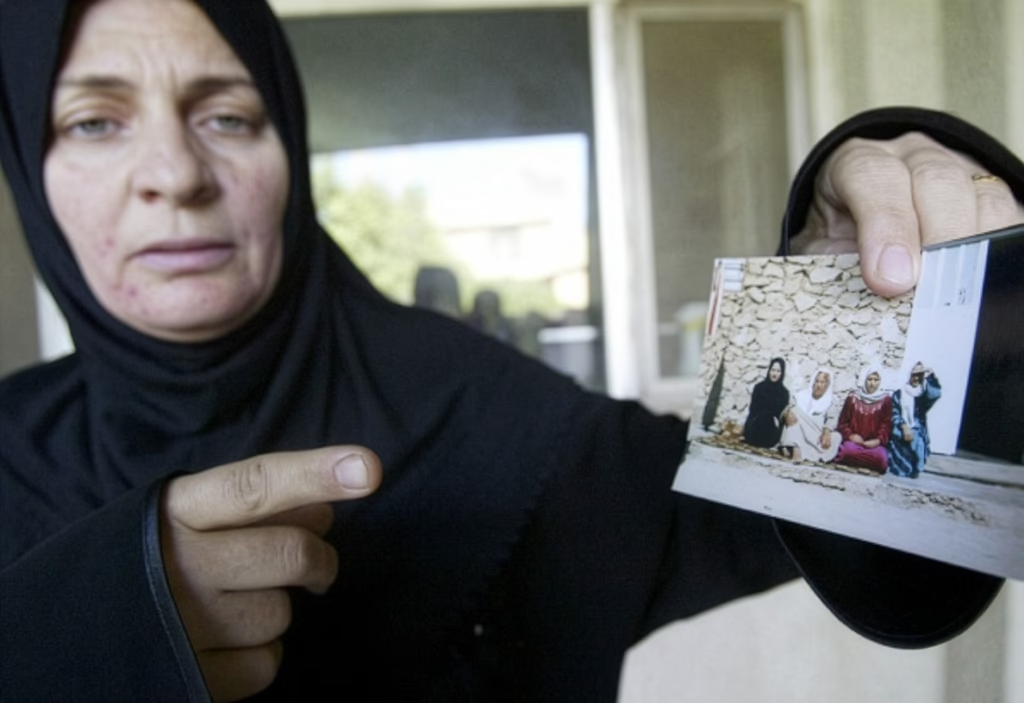
On the twentieth anniversary of the Haditha massacre, justice for the victims is still out of reach. The way wars are fought may be changing, but the evasion of accountability remains a defining feature of modern conflict. This post remembers the victims of Haditha and reflects on the enduring failure to deliver justice, at a time when technological advances risk deepening the same patterns of dehumanisation and impunity.
Twenty years ago last month, on Saturday 19 November 2005, US Marines massacred 24 unarmed Iraqi civilians in Haditha, Iraq. The atrocity – a reaction to a roadside IED attack which killed one Marine and injured two others that morning – was an act of vengeful rage and a failure of human empathy. Those killed included a three-year-old girl and an elderly man in a wheelchair, with sickening images only recently released showing women and children slain as they cowered on beds and in the corners of their family house. Five young and unarmed Iraqi men who had been travelling in a taxi were shot dead, allegedly on their knees. The US military initially attributed the civilian deaths to the blast of the roadside bomb, rather than admitting the killing spree.
Although shocking for its callous violence and brazen illegality, the massacre in Iraq’s Anbar province was far from being the only time civilians were killed in Iraq. Thousands of civilians had already been killed by the US military and coalition partners, most from the use of explosive weapons in populated areas, and thousands more would continue to be killed in the violence that followed.
The full horror of the Haditha massacre, including the initial cover-up by the US military, was confirmed by the decades-delayed release of photographs as part of a Pulitzer-prize winning investigation by the New Yorker, confirming a truth the families have known for two decades.
A legacy of systemic dehumanisation and impunity
After the fact, the Haditha killings continued to be subject to a calculated campaign of dehumanisation, with justice bypassed through procedural delays and repeated efforts to evade consequences. The New Yorker’s powerful podcast series investigating the tragedy also revealed the racist sentiments used to rationalise the crime, and a prejudice that was compounded by the legal system referring to the victims only by numbers, stripping them of their humanity.
Of the eight Marines initially charged for their role in the Haditha massacre, seven had their charges dismissed or were acquitted. The senior Marine present, Staff Sergeant Frank Wuterich, was convicted only of dereliction of duty. The lack of accountability for the killings and the attempted cover-up remains a failure of military justice. As research group Action on Armed Violence (AOAV) has written, the outcome is the ultimate illustration of the deep flaws of a justice system unwilling to hold its own to account.
Iraqis have not forgotten the injustice, and the legacy of impunity is also a painful reminder of both the limits of the mechanisms meant to deliver justice and the ability of powerful nations to operate outside the bounds of international law. ‘There should be justice. At the very least, I should get a small part of the justice my family are owed,’ Safa Eunice, whose whole family was killed, told the BBC.
The erosion of empathy and the widening accountability gap
The way the US engages in conflict has changed in the twenty years since Haditha, but the systemic dehumanisation of civilians in conflict continues. Technological advances mean warfare is conducted increasingly remotely and autonomously, and make it harder to hold individuals or institutions to account for harmful outcomes. The Haditha victims were reduced to numbers after the fact, but AI-enabled military systems reduce humans in the war zone to a digital signature in real time. As the accountability gap widens, so too does the moral distance between perpetrator and victim, and the consequences are felt long after the violence stops.
The loss of human empathy in warfare comes at a devastating cost to survivors. The denial of compassion and understanding stifles any possible reconciliation. If soldiers at Haditha were driven by emotion, they were at least human. That human connection, however perverse, leaves open a psychological space for understanding, guilt, and the opportunity to seek forgiveness and reconciliation from the victims’ community. As some Iraqis who grew up alongside US soldiers in the post-2003 years have shared, the twisted moral logic of human-driven conflict was something they could, in time, process, coming to see their invaders as victims in their own way. But when accountability is structurally denied, with humanity removed from the loop, the possibility of healing and recognition is destroyed.
The need for real justice
The 2005 Haditha massacre and the abject failure to deliver justice for the victims and their families provide stark lessons: accountability cannot be left to those who wield power unchecked; survivor communities should be meaningfully included in the path to justice and reconciliation; and oversight and transparency are vital to protect civilians and uphold their rights. Justice must be actively secured for the victims of Haditha, and the dynamics that enabled this atrocity and injustice must be acknowledged and addressed in today’s context.




1 thought on “Twenty years after the Haditha massacre, why are militaries no more accountable?”
Excellent read. Very important