The only certainty in the rapidly escalating conflict between the United States/ Israel and Iran is civilian harm on a mass scale, said Ceasefire Centre for Civilian Rights in a statement.
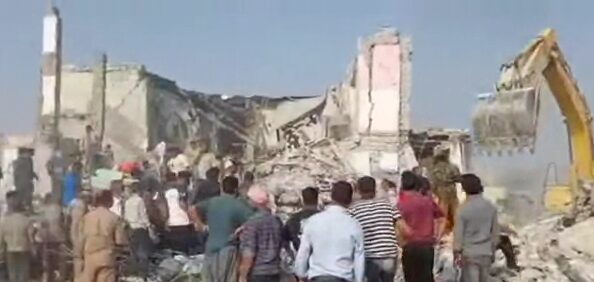
With the scope, duration and objectives of the conflict still unclear, reported civilian casualties are nearing 1,000 after just one weekend. This includes hundreds killed in Iran, including in attacks on a girls’ school and a hospital, 9 killed in an attack on a residential area in Beit Shemesh, Israel, and numerous further civilian casualties reported across the region.
Two days after the US and Israel attacked Iran, a wider regional conflict has now erupted involving at least 13 countries, including Middle Eastern states and European states including the UK.
There is near consensus among international law experts on the use of force that the attack on Saturday 28 February by the US/Israel on Iran was an illegal act of aggression. In launching attacks against many of its neighbours, Iran has also resorted to the unlawful use of force. Furthermore, specific attacks by the US, Israel and Iran raise serious questions under international humanitarian law (IHL), including whether attacks were directed only against military objectives and whether all feasible precautions were taken to minimize civilian harm.
Additional grave risks for civilian populations across the Middle East include:
- Organized social media disinformation campaigns aimed at the denial or justification of civilian harm from both indiscriminate bombardment and from incidental collateral damage
- Further waves of violent repression of Iranian protestors or opposition groups by the Iranian authorities, following the suppression of the January protests
- Indiscriminate attacks by Iran-backed armed groups in the region, including Hezbollah in Lebanon and the Popular Mobilization Forces in Iraq
- ‘Preventive’ measures by Israel, including mass forced evacuations in South Lebanon and closure of humanitarian access to Gaza
- The reverberating humanitarian effect of the destruction of essential civilian infrastructure, and the impediment of international trade, including shipping to Asia/Pacific.
As these risks mount, Ceasefire calls on the US Congress and the UK Parliament to assume their respective roles regarding constitutional war powers and to insist on an immediate cessation of hostilities.
Notes for editors:
- In the United States, the War Powers Resolution (50 USC 1451-1458) limits Presidential authority to go to war without Congressional approval. In the UK, a constitutional convention requires Parliament to be consulted on committing UK forces to war. See: Strengthening democratic control of UK war powers.
- For more information or interviews, email: contact@ceasefire.org