
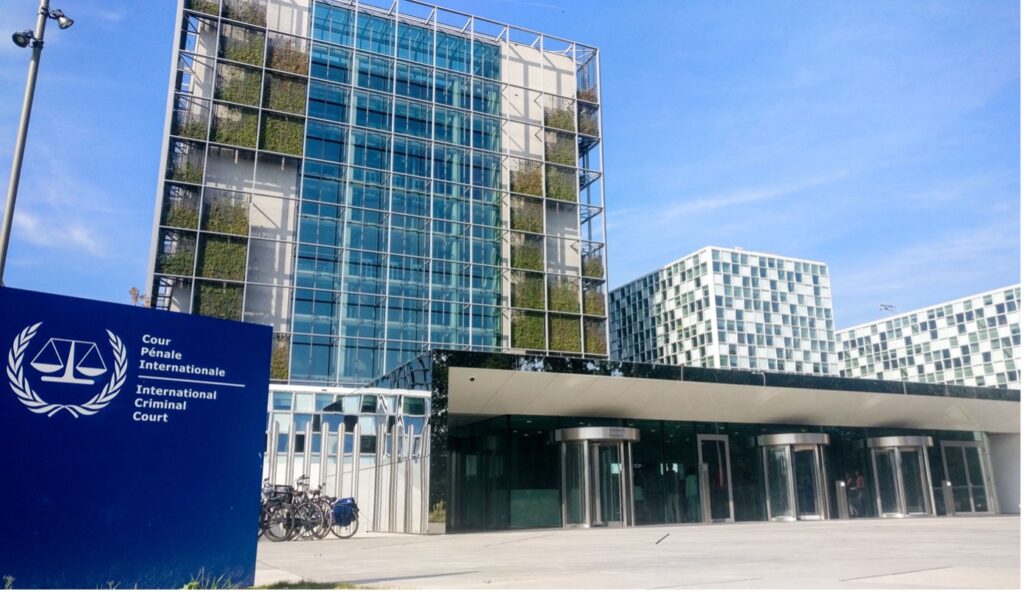
For more than a decade, many perpetrators of human rights abuses and international crimes in Libya behaved as though accountability simply did not apply to them. In a country fractured by division, dominated by armed groups, and crippled by dysfunctional justice institutions, impunity gradually stopped being a temporary crisis and became part of the political landscape itself. The idea of a Libyan suspect appearing before the International Criminal Court (ICC) often felt closer to fiction than reality.
That is why the confirmation of charges hearings in the case of Khaled Mohamed Ali El Hishri, the former senior figure in the Special Deterrence Force and a senior figure long associated with systemic abuses at Mitiga prison, carried significance far beyond legal procedure. Held before the ICC in The Hague on 19, 20 and 21 May, the hearings were not simply about confirming charges against a man accused of war crimes and crimes against humanity. They also represented something much larger for victims, survivors and their families, and for Libyans who have spent years watching atrocities reduced to passing headlines on television screens, with no real accountability in sight.
For the first time since the Libya situation was referred to the ICC by the UN Security Council in 2011, a Libyan suspect stood before international judges. That alone gave the moment a symbolic weight extending far beyond El Hishri himself, especially for communities devastated by years of grave abuses and violations, many of whom had long come to see justice as permanently deferred, if not entirely impossible.
The El Hishri case is inseparable from the broader pattern of abuse inside Libya’s detention facilities, of which Mitiga prison is one of the clearest and most infamous illustrations. For many Libyans, Mitiga ceased long ago to be just another detention centre. It became a place where people disappeared, synonymous with torture and other ill-treatment. For years, victims, survivors, families, human rights defenders and Libyan organisations have documented and sounded the alarm about what happened there despite threats and intimidation, insisting that these crimes should not swept aside by political settlements and power-sharing deals.
I attended part of the confirmation of charges hearings from inside the ICC courtroom in The Hague alongside colleagues from Libyan and international organisations. I saw El Hishri sitting motionless in the defendant’s box for a second time, almost frozen, barely moving, barely even blinking, as judges, prosecutors and victims’ representatives spent hours recounting the abuses attributed to him. The Court referred to testimony and evidence from more than 170 victims and witnesses.
The experience was emotionally overwhelming, particularly because several survivors of El Hishri’s abuses were sitting with us in the public gallery. Although the audience is separated from the courtroom by thick glass and can only follow proceedings through headsets, one survivor broke down in tears when he first saw El Hishri sitting in the dock. The atmosphere was heavy with grief, anger and a quiet sense that years of struggle had finally forced these crimes into the open. For many victims, this was not just another court hearing. It was proof that years of struggle, testimony and persistence had not entirely disappeared into silence.
Many victims and survivors now describe these hearings as a long overdue acknowledgement of what they endured. An acknowledgement that what happened, and in many ways continues to happen, was not a collection of isolated incidents or individual excesses that could simply be ignored. It also affirmed that years spent documenting abuses and demanding truth were not entirely in vain.
But the real question for victims today is not simply whether El Hishri will be convicted and punished. It is whether this case marks the beginning of a broader path toward accountability, or whether it will remain an isolated exception within a system still defined by impunity.
The case is therefore not just about prosecuting one man. It is a test of whether international justice can still restore even a fragment of trust for victims in Libya and revive hopes for accountability after nearly every domestic avenue for justice has collapsed.
El Hishri’s arrest in Germany and subsequent transfer to the ICC demonstrated that accountability is still possible when meaningful cooperation with the Court exists. It also sent a clear message to other perpetrators that impunity before international justice is no longer guaranteed. Even inside Libya, the case triggered visible anxiety among authorities in both eastern and western Libya, alongside clear unease within armed groups and their leaderships.
Almost overnight, rival authorities began speaking about “internal investigations” and limited accountability measures targeting lower-level figures. Not because they had suddenly embraced justice, but because seeing a Libyan suspect sitting rigidly before judges in The Hague was enough to remind everyone that the old guarantees of immunity no longer felt watertight.
Limited as these reactions may be, they still reveal something important about the deterrent power international justice can carry, even before a verdict is issued.
At the same time, trust in justice remains deeply fragile. Victims have spent years watching investigations stall and other cases frozen by political calculations. Many have also lost faith in Libya’s divided judiciary, which remains unable to deal seriously with international crimes, while repeated transitional justice efforts have largely collapsed without producing meaningful results.
For many victims, international justice has therefore become the last remaining option. That is precisely why expectations surrounding the El Hishri case are so high. Any failure, prolonged delay or perception of selective justice will not only damage this particular case, but further erode victims’ belief that accountability is possible at all.
And if the case falters, the message will be understood quickly: even The Hague is not the end of the road.
The issue is not simply whether hearings are held or procedures completed. The real question is whether this case can genuinely open the door to broader accountability in Libya. Victims are not seeking the prosecution of isolated individuals alone. They want accountability for those who ordered, enabled, protected and sustained these crimes for years. Without reaching higher levels of responsibility, justice will inevitably appear selective and incomplete, regardless of the importance of the case itself.
Ultimately, the El Hishri case cannot be seen as the conclusion of the search for justice over crimes committed in Mitiga. It is the beginning of a larger test of whether accountability is still genuinely possible. Behind El Hishri stand eight other ICC suspects who still remain at large. If this case becomes nothing more than an isolated exception within Libya’s wider system of impunity, the Court risks losing not only the confidence of victims, but perhaps the last remaining belief that justice in Libya is still achievable.



1 thought on “From Mitiga to The Hague: What does the El Hishri case mean for Libya’s victims?”
good job i wish you all the best, it’s nice to see guys and girls like you work to keep libya safe and happy country