MEDIA RELEASE
29 October 2026
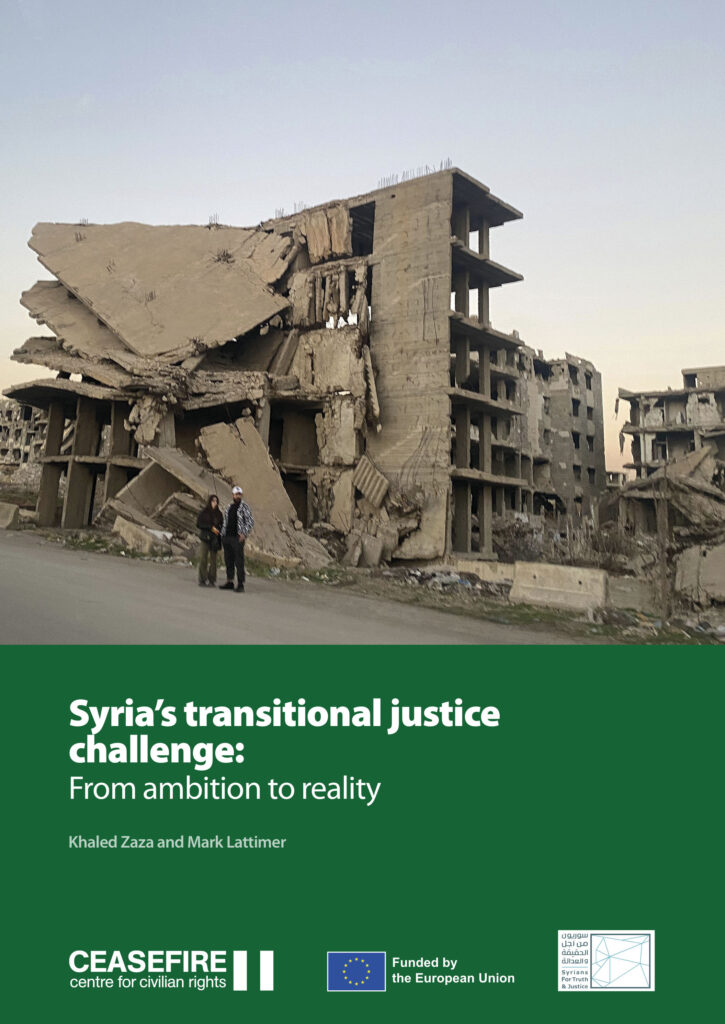
A comprehensive law on transitional justice is needed in Syria to realize the promise of accountability and anchor stability and reconciliation, says a new report from Ceasefire Centre for Civilian Rights and Syrians for Truth and Justice.
After decades of authoritarian rule and more than 14 years of conflict, the fall of the Assad government in December 2024 opened a window for accountability. But concerted national action and international support are both now required to deliver justice and to avoid further cycles of recrimination and violence.
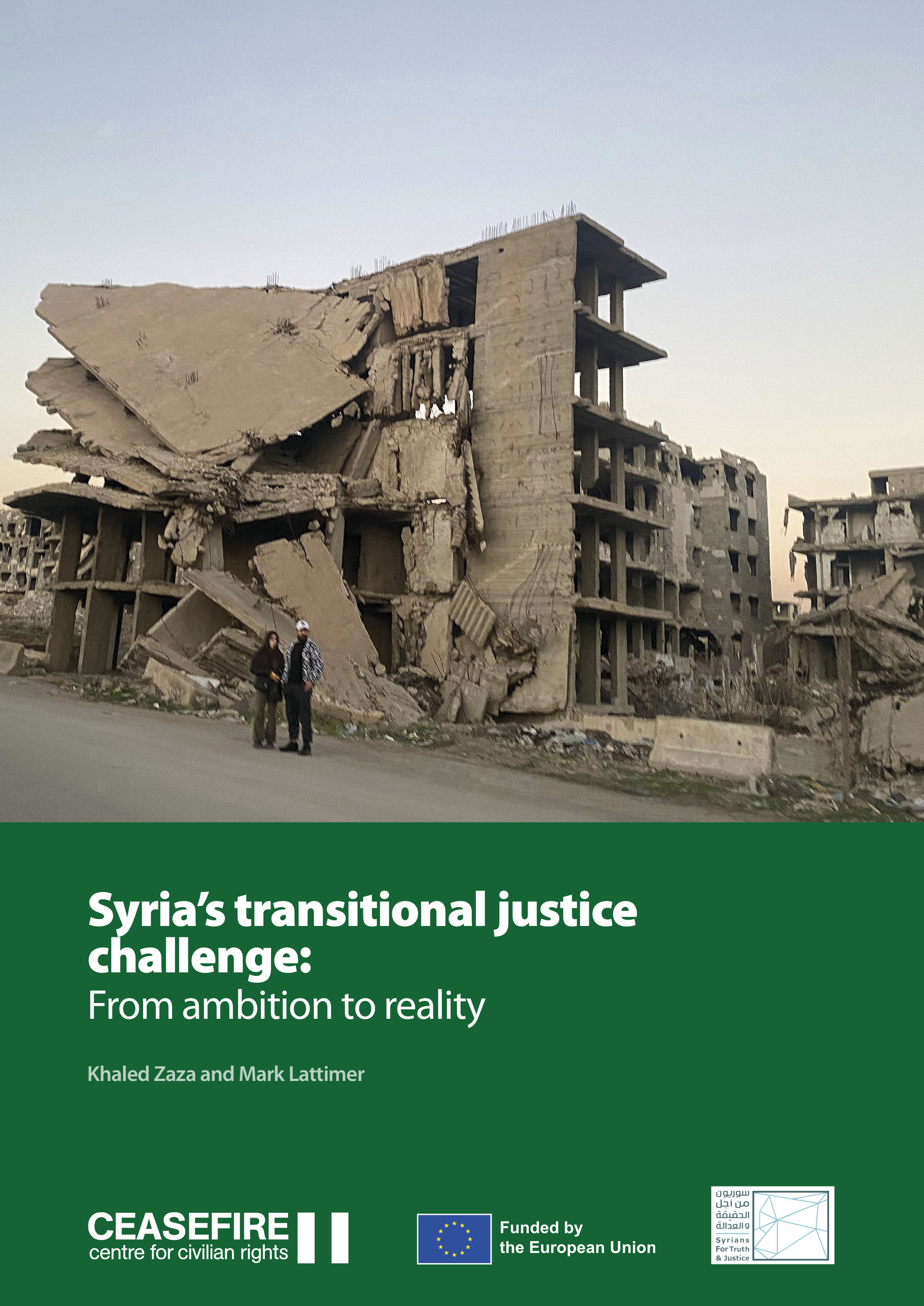
Grounded in fieldwork across Syria, this report assesses the national steps towards accountability taken to date, including the establishment of the National Commission on Transitional Justice, the drafting of a transitional justice law and the opening of the first trials of perpetrators from the former regime.
‘Some welcome progress has been made, but true transitional justice must extend beyond the crimes of the Assad regime to address violations by other parties throughout the conflict, particularly ISIS,’ said Bassam Alahmad, Executive Director of Syrians for Truth and Justice.
The report details the challenges of delivering justice on the scale required, with millions of Syrians entitled to reparation, but with a justice system that is yet formally to recognize crimes under international law, including war crimes, enforced disappearance and crimes against humanity.
‘For millions of Syrians there is still no answer to the questions that matter most: can they get their homes back, what happened to their missing relatives and when will the perpetrators be brought to justice?’ said Mark Lattimer, Ceasefire’s Executive Director. ‘The international community has welcomed Syria’s government back into the fold, but it should continue to promote accountability.’
The report also examines the practical challenges in identifying Syria’s missing and analyses the accountability gaps in relation to violations committed by foreign state actors and armed opposition groups, whose conduct falls almost entirely outside the Commission’s current mandate. As violations continue, it addresses the question of reconciliation and the fourth pillar of transitional justice, guarantees of non-recurrence, which the Syrian context demands but which has to date received insufficient attention.
‘Transitional justice mechanisms must also ensure justice and redress for victims of massacres in the Coastal region and Suwayda, while incorporating Decree No. 13 on Kurdish rights,’ added Mr Alahmad. ‘We must seize this opportunity to achieve a comprehensive justice process, rather than a selective or retaliatory one.’
Drawing important lessons from other transitions, including in Iraq, Lebanon and Bosnia, the report includes comprehensive recommendations on advancing transitional justice and legal reform, including extending the mandate and safeguarding the independence of the National Transitional Justice Commission, incorporating crimes under international law into the Syrian Penal Code and establishing impartial restitution and reparation programmes at national level.
Notes for editors: Syria’s transitional justice challenge: From ambition to reality, by Khaled Zaza and Mark Lattimer, is published on 29 October 2026. For interviews please email: contact@ceasefire.org and bassam.alahmad@stj-sy.org